





2024
My plaster hands
Your exhale, movement, touch
A collection of invisible breaths (projected video)
Zephyr زفير (installation)
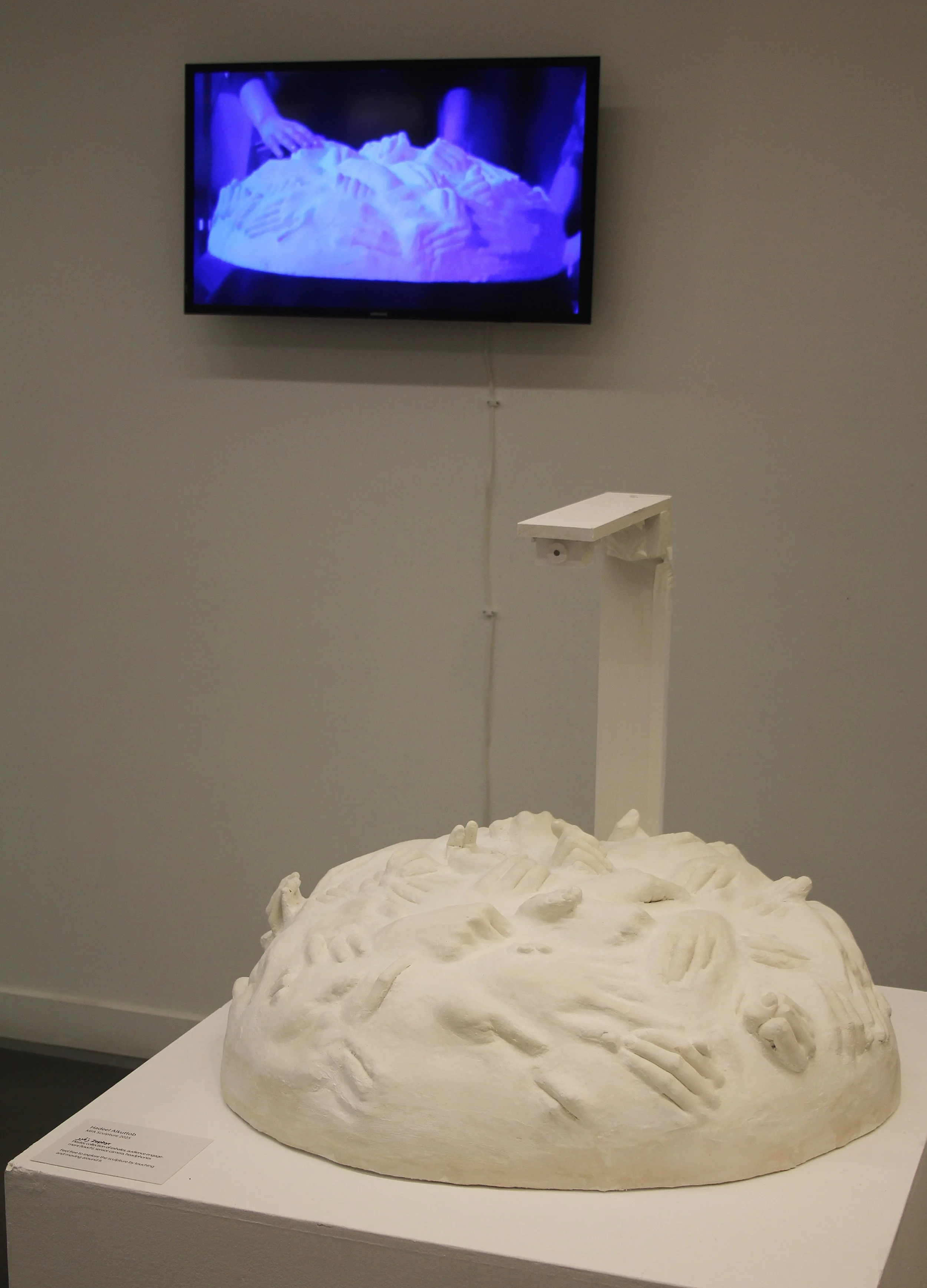
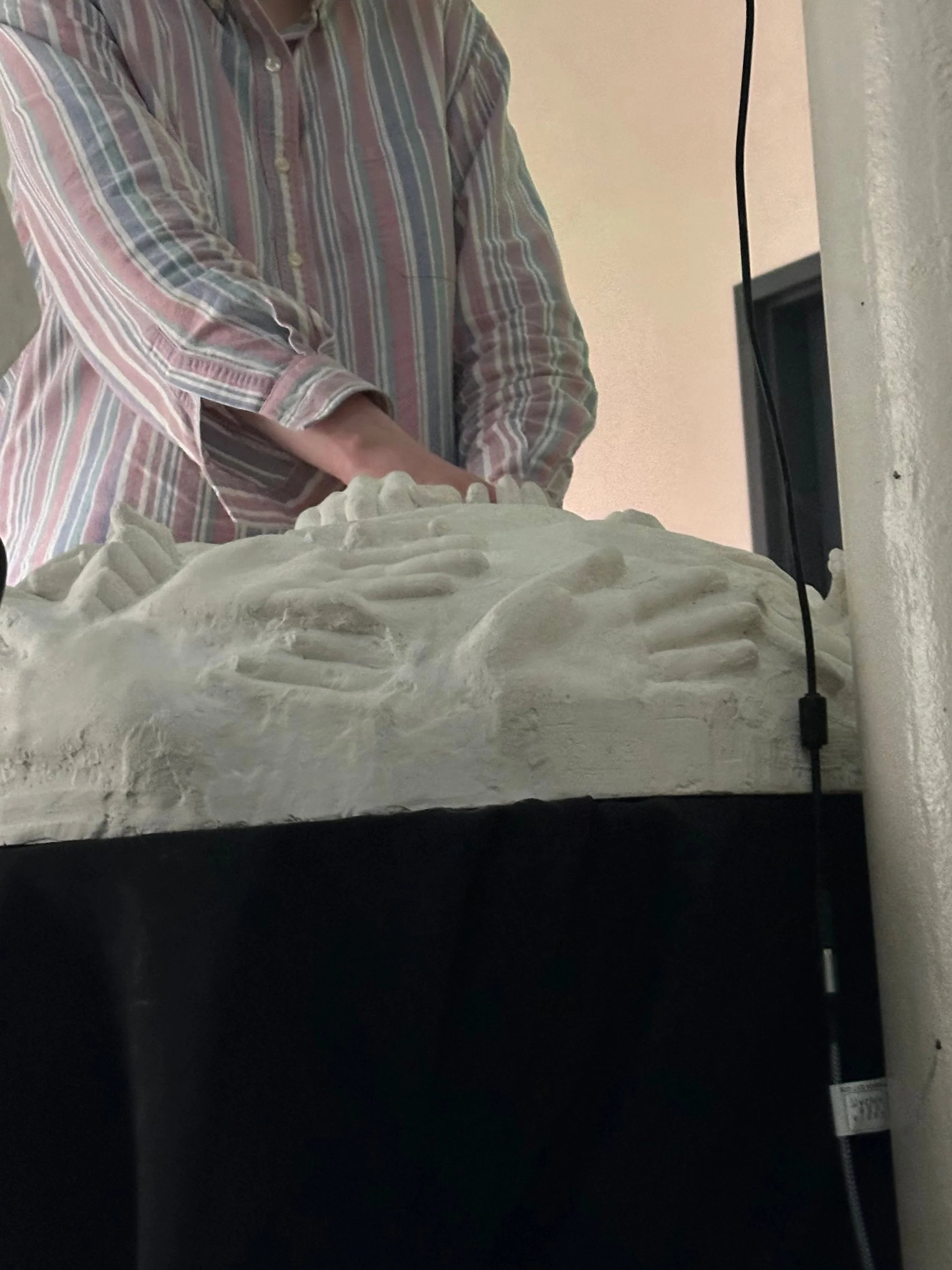
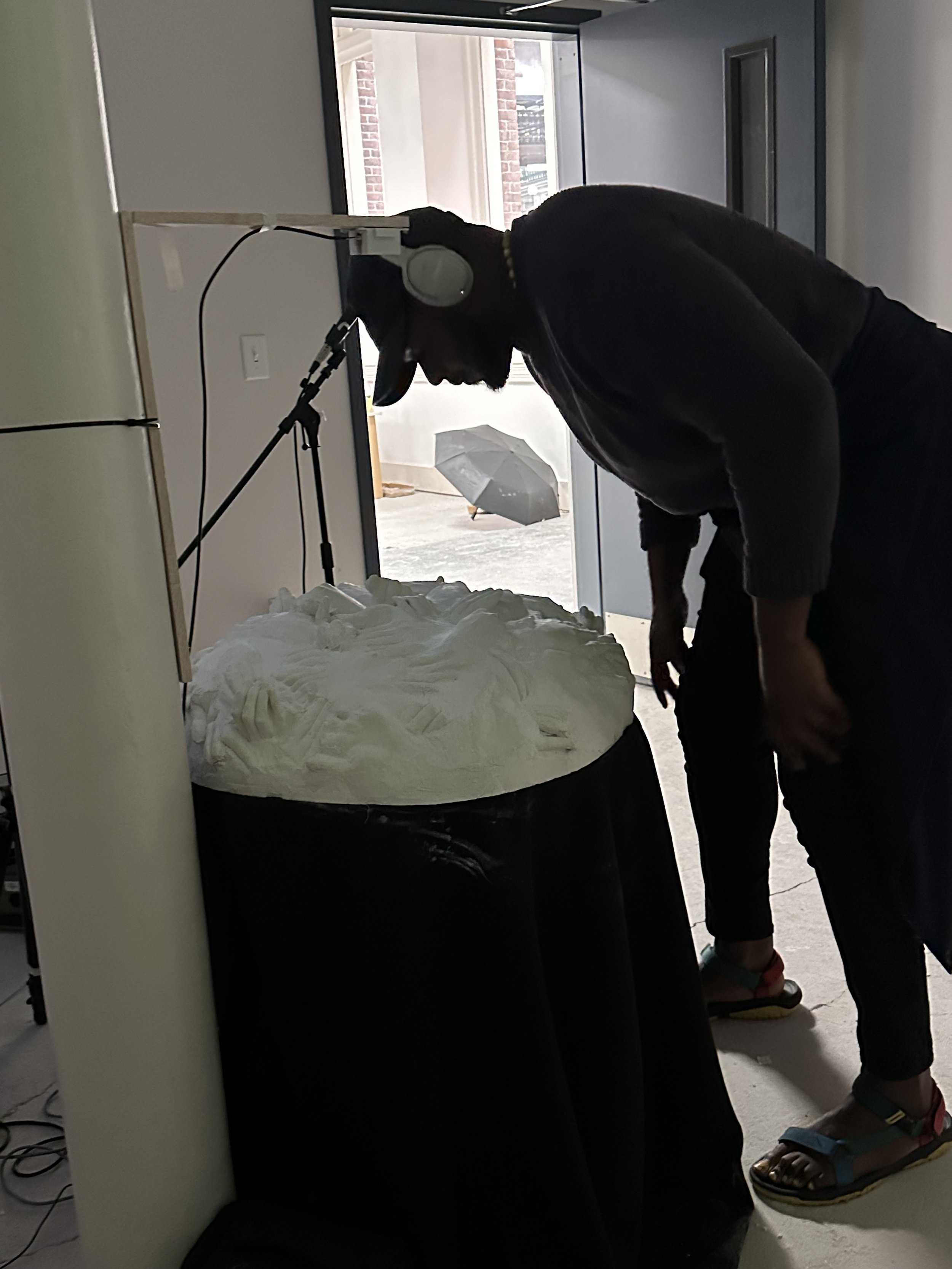
Zephyr is an interactive sound sculpture that invites the breath of the viewer to shape its sonic and conceptual form. The instrument is activated when the visitor exhales into a microphone. This recorded breath becomes the basis for a sound loop that plays back through the sculpture when the viewer touches it. Their hand becomes the modulator, changing the playback’s speed, pitch, and spatial quality. Sound becomes elastic, stretched, and compressed by their gestures.
A video is projected in the corner of the ceiling above the instrument. It is a sequence of images of non-human breathing: tidal waves, the flicker of fire, a bridge expanding with heat, an engine pulsing, and the soft cycle of an air conditioning unit. These inanimate structures are caught in a rhythm: inhale, exhale.
Zephyr زفير
(Performance)
2024
The Collected exhales were later reprogrammed for a performance, played spatially through a 30-speaker dome. Diffusing breath into a spatial composition that blurs the line between the individual and the collective.
The title Zephyr evokes several meanings. In English, it refers to a gentle wind, a passing breeze. In Arabic, the root "z-f-r" (زفر) carries the meaning of a sigh or groan, an exhale loaded with feeling, effort, or sometimes grief.
The notion of effluence is important to the work. To exhale is to release, to let something go. But it is also to extend oneself outward. Effluence can refer to discharge, bodily, environmental, or emotional. It can mean pollution or overflow. It also carries the philosophical sense of radiation, aura, the ineffable thing that escapes the body and becomes part of the world.
Zephyr is grounded in ethical and spiritual entanglements with material. The work begins from the belief that humans are not detached observers but responsible participants, shaping and shaped by the world. This echoes the Qur’anic concept of khilāfa (خلافة): the human being as a trustee or caretaker on Earth. This responsibility is not optional; it is embedded in our condition. The world is not inert but entrusted. Every breath, every act of touch, becomes part of a web of accountability. Even the smallest interaction or no interaction is a form of response.
This does not imply human centrality. In Islamic cosmology, all beings have agency. The Qur’an tells us that everything glorifies the Divine in its own way, even if we do not understand it (17:44). This is tasbīḥ, a form of praise that belongs to all creation. The waves, the fire, the metal, they already know how to breathe. The human is not the one who animates the world but the one invited to listen.
Breath becomes a medium for resonance. Between bodies. Between the human and the non-human. Between that which is given and that which is made.